Implementing a topical ecosystem in SEO allows organizations to strategically align their content with user intent and search patterns. This framework not only enhances the overall user experience but also facilitates better indexing by search engines, reinforcing the site’s relevance and authority. As a result, businesses can effectively enhance their brand credibility and foster long-term growth in search rankings. Embracing this comprehensive strategy is essential for sustained success in today’s competitive digital landscape.
Understanding the Topical Ecosystem in SEO
A topical ecosystem is a well-structured framework of content built around a core theme, supported by deeply connected subtopics and related content assets. It mirrors how humans naturally explore a subject and how search engines evaluate depth, relevance, and authority.
Instead of isolated articles, a topical ecosystem functions as an interlinked network of expertise that signals comprehensive knowledge on a subject. This network makes it easier for search engines to understand our domain authority, enabling higher rankings for multiple keywords.
Why a Topical Ecosystem Matters for Modern SEO
Search engines increasingly rely on contextual signals to judge whether a website is credible. A topical ecosystem helps us:
- Build thematic authority across all related topics
- Rank for long-tail and high-volume keywords
- Increase internal link equity and crawl efficiency
- Enhance user engagement and retention
- Create a scalable content structure for the future
By establishing topical depth, we align with search algorithms that prioritize expertise over superficial keyword targeting.
Components of a Strong SEO Topical Ecosystem
A powerful topical ecosystem consists of multiple layers of content, each with a clear purpose in reinforcing domain expertise. Together, these components create a multi-directional network that facilitates both user understanding and search engine evaluation.
1. The Core Pillar Page: The Central Source of Authority
The pillar page acts as the foundational piece upon which the entire ecosystem is built. This page must be:
- Broad enough to cover the entire topic domain
- Detailed enough to establish confidence
- Structured with clear sections connecting to deeper content
Our pillar page should comprehensively explain the overarching topic while linking to subtopic clusters that explore each concept further.
2. Topic Clusters: Deep-Dive Content for Enhanced Relevance
Topic clusters expand on specific areas introduced in the pillar page. Each cluster focuses on a unique angle, keyword, or subtopic. These pages provide:
- Expert-level analysis
- Data-backed insights
- Step-by-step explanations
- Real-world examples
Their primary purpose is to develop topical depth while funneling authority back to the pillar content.
3. Supporting Articles: The Expansion Layer
These articles explore deeper questions, long-tail variations, and niche scenarios. They support both the pillar and cluster pages by:
- Answering user-intent driven queries
- Enhancing semantic coverage
- Improving keyword variation ranking
Supporting articles create the breadth needed for search engines to recognize topical mastery.
4. Internal Linking Structure: The Web that Holds the Ecosystem Together
A strong internal linking network ensures that:
- Authority flows naturally
- Crawl bots understand hierarchy
- Users easily navigate between related topics
Our linking strategy must be intentional, directing users from general to specific content and vice versa to reinforce expertise and page authority.
How to Build a High-Authority Topical Ecosystem
Step 1: Define the Core Topic and Content Boundaries
We begin by selecting a central topic that aligns with our business goals and audience needs. This topic must be:
- Broad enough to support multiple subtopics
- Relevant to our long-term content strategy
- Competitive enough to justify building an ecosystem
This helps define the semantic boundaries for creating a fully optimized topical map.
Step 2: Conduct Advanced Keyword and Intent Research
A topical ecosystem requires extensive keyword and intent mapping. We analyze:
- Primary keywords
- Long-tail variations
- Question-based queries
- User intent patterns
By grouping keywords under thematic umbrellas, we create a content hierarchy rooted in strategic research.
Step 3: Create a Topical Map
A topical map visually outlines how each piece of content connects. This includes:
- Pillar topic
- Core clusters
- Supporting articles
- Semantic connections
A well-designed map ensures no topic gaps, maximizing both coverage and ranking potential.
Step 4: Produce High-Quality, Expert-Level Content
Each article within the topical ecosystem must demonstrate:
- Depth
- Originality
- Relevance
- Practical value
We prioritize real insights, data, and examples that enhance credibility and user engagement.
Step 5: Strengthen Internal Linking Strategy
We interlink:
- Clusters to pillar
- Supporting articles to clusters
- Related topics across the ecosystem
This interconnected web not only boosts SEO but also creates an intuitive user journey.
How a Topical Ecosystem Strengthens E-E-A-T
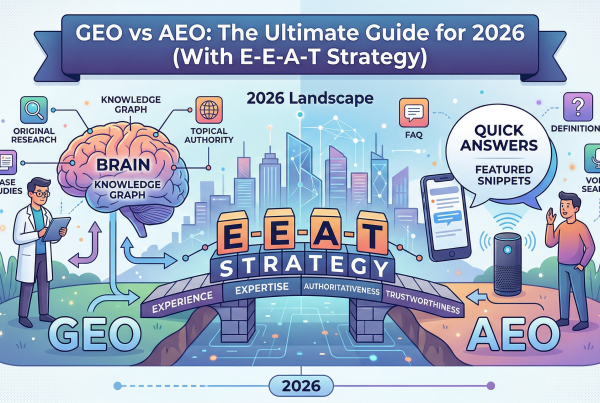
Google’s focus on Experience, Expertise, Authoritativeness, and Trustworthiness (E-E-A-T) has shifted the SEO landscape dramatically. A well-built topical ecosystem allows us to demonstrate:
- Experience through real-world examples and case studies
- Expertise through detailed, data-rich content
- Authoritativeness through consistent coverage of a niche
- Trustworthiness through structured, factual information
The deeper and more interconnected our ecosystem, the stronger our E-E-A-T signals become.
Topical Ecosystem vs. Traditional SEO Strategies
Traditional SEO often focuses on optimizing individual pages, while a topical ecosystem emphasizes:
| Traditional SEO | Topical Ecosystem SEO |
|---|---|
| Single keyword focus | Multi-layer semantic coverage |
| Isolated pages | Interlinked networks |
| Basic on-page optimization | Contextual authority building |
| Ranking one keyword | Ranking hundreds of related terms |
| Short-term gains | Long-term dominance |
Topical ecosystems support scalable SEO growth, making them essential for ranking and sustaining visibility.
Best Practices for Maintaining Your Topical Ecosystem
To keep our ecosystem strong and competitive, we must:
- Update outdated content regularly
- Add new clusters as trends evolve
- Expand supporting articles with fresh data
- Monitor search intent shifts
- Improve internal linking as new pages are created
Ongoing optimization ensures that our authority remains current and aligned with search engine expectations.
Final Thoughts: The Future of SEO Belongs to Topical Ecosystems
A topical ecosystem is no longer optional—it is fundamental for brands aiming to dominate organic search. By fostering interconnected, authoritative content structures and delivering unmatched value across topics, we position ourselves as leaders in our field. When executed correctly, a topical ecosystem not only boosts rankings but transforms our website into an unavoidable source of truth for users and search engines alike.